


February 26, 2026
Owning the transaction: What happens when CPOs control the sale
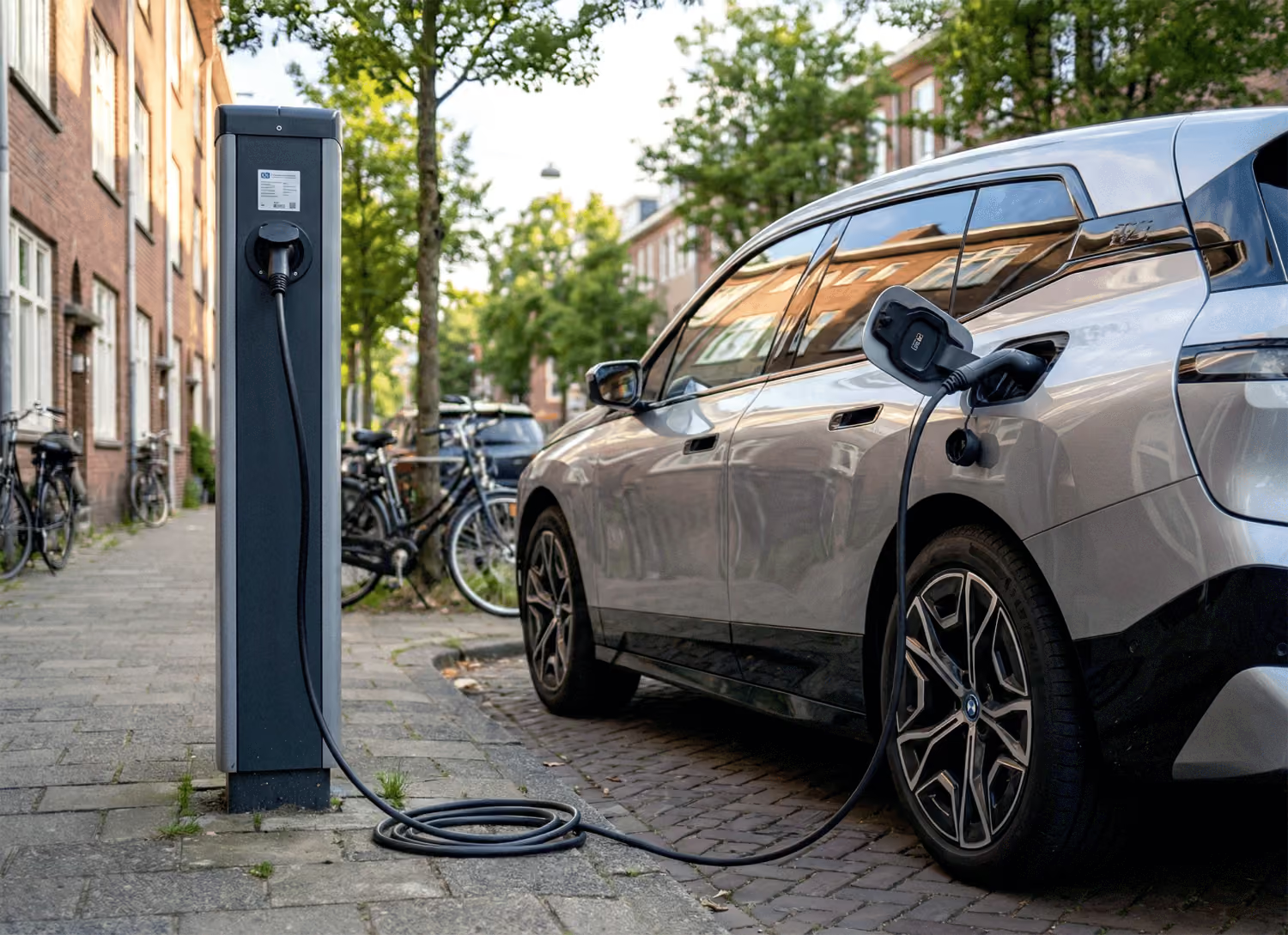
How commercial control in EV charging enables operators to steer pricing, protect trust and optimise utilisation.
Last time we explored how commercial control gradually shifts away from operators in reseller-led models. This week is about the alternative.
What happens when commercial control sits where it should - with the CPO?
Why this matters now
2026 marks a turning point for EV charging, as several pressures converge at once.
Profitability pressure
In a capital-intensive industry:
- Adding chargers without steering demand simply scales cost
- Idle assets still carry lease, grid and maintenance obligations
- Profitability depends on influencing usage, not just expanding footprint
Pricing has to function as a lever, not a static number.
Regulation changes
AFIR is raising the bar for transparent, consistent pricing across the EU, while PSD3 sharpens accountability around payment flows and responsibility.
Structures where multiple parties reshape the price between the operator and driver increasingly look exposed. In practical terms, that means:
- Greater scrutiny on price transparency
- Clearer accountability for who sells the service
- Reduced tolerance for fragmented pricing structures
Mass EV adoption
With new, cost-effective EVs entering the market, an entirely new segment can now purchase an EV, which means public charging is moving from:
- Early adopters → everyday drivers
- Niche infrastructure → everyday expectation
As EVs become more affordable and fleets scale, drivers expect the same clarity and predictability they experience at a petrol forecourt.
The market is shifting from installation to optimisation, and what differentiates performance is control over how price reaches the driver, how trust is built, and how demand is steered.
At its simplest, commercial control means the operator
- Controls the visible retail price
- Owns the sale
- Receives direct customer feedback without reseller interference
As the industry scales into its next phase, that control becomes critical.
What happens when CPOs control the sale
When operators control the sale:
- Pricing becomes a reliable demand signal rather than a suggestion
- Trust strengthens because the relationship is direct
- Feedback loops shorten, accelerating optimisation
- Commercial strategy and margin stay aligned with the operator’s intent
The infrastructure remains the same, but the economics behave differently.
A network that can be steered
Once a charging site is live, most structural decisions are already made. Capital is deployed, hardware is installed, location is fixed.
What remains adjustable is how demand is influenced.
In a market where energy delivery is broadly comparable, and drivers have multiple charge points within reach to choose from, pricing becomes one of the strongest levers an operator can use. It shapes behaviour and influences which network a driver returns to.
But pricing signals only work if they reach the driver intact.
In a commercially aligned structure:
- When a price changes, the driver sees that price
- When an off-peak incentive is introduced, demand responds
- When a location underperforms, pricing can be adjusted and the outcome measured without layers of mediation
Utilisation becomes something the operator can influence intentionally rather than monitor passively.
In a capital-intensive network, that distinction drives profitability.
Commercial control ensures that pricing decisions translate directly into market behaviour, without distortion or delay.
Trust sits inside the transaction
Price is not only a demand signal, it’s a trust signal.
When drivers encounter materially different prices for the same charger across different platforms, they associate the experience with the network itself, unaware that this distortion originates from resellers.
The result:
- Credibility erodes
- Confusion increases
- Reputational risk compounds
But when the sale sits with the operator, the structure changes:
- The operator’s name appears on the invoice
- The commercial relationship is clear
- Pricing logic aligns with the CPO
- Refunds and dispute handling align with the CPO
When it doesn’t, the operator provides the charging session, but another party controls the sale, the invoice and the customer relationship.
The Merchant of Record (MoR) is the entity that legally sells the charging session, issues the invoice, and handles payment and disputes. When the CPO acts as (or appoints) the MoR, trust and accountability sit directly between operator and driver.
Feedback becomes optimisation
Operational data confirms that a session occurred, commercial control adds context.
When the transaction is direct:
- Feedback can be embedded into the experience
- Drivers can rate their session immediately
- Issues can be flagged in real time
- Insight flows straight back to the operator
That shortens the distance between experience and action.
As a result:
- Underperforming sites and issues with the charging station are identified faster
- Pricing experiments generate measurable learning
- Service improvements are made in response to real customer input rather than assumptions
In practical terms, commercial control enables operators to steer utilisation, protect brand trust and optimise profitability over time.
The structural alternative
For a long time, achieving this level of control meant CPOs had to build and manage their own direct commercial channel from scratch - managing MoR responsibilities, payment handling, invoicing, VAT compliance and customer interaction - or accept that resellers would sit permanently between them and the driver.
It felt like a trade-off between interoperability and ownership.
It no longer is.
A direct commercial layer can now sit on top of the existing software stack and interoperability protocols, enabling operators to:
- Determine the visible price
- Act as (or appoint) the MoR
- Receive direct customer feedback
- Align the transaction with their own commercial logic
That is the layer Cariqa provides.
Not another reseller in the chain, but the capability for operators to reclaim the retail relationship with the driver.
Cariqa restores commercial control, structurally, not symbolically.
The dividing line
Owning chargers is one layer of control, owning the sale is another.
As the market moves further into its monetisation phase, the operators who control both will:
- Steer demand with intent
- Protect trust
- Build durable margins over time
Those who do not will continue to operate infrastructure, but without fully steering its economics.
Commercial control is how deployed assets become optimised assets. In a market entering its performance phase, that distinction will separate operators who participate from those who lead.
FAQs
What is commercial control in EV charging?
Commercial control in EV charging means the operator determines the retail price, owns the sale, and receives direct customer feedback without intermediary distortion. It ensures that pricing decisions, trust and revenue flow sit with the CPO rather than a reseller.
Why is commercial control important for CPOs?
As the market shifts from deployment to optimisation, utilisation determines profitability. Commercial control allows operators to steer demand with price signals, protect brand trust and optimise network performance over time.
What does Merchant of Record (MoR) mean for a CPO?
The MoR is the entity that legally sells the charging session, issues the invoice, and handles payment and disputes. When the CPO acts as (or appoints) the MoR, the commercial relationship sits directly between operator and driver.
How does pricing control impact utilisation?
Pricing is the clearest demand signal an operator can send. When the price set by the CPO reaches the driver intact, utilisation can be influenced deliberately rather than passively observed. A recent UK study found that a 40% reduction in public charging price increased demand by 117% (check out the study here).
How can operators regain commercial control without replacing infrastructure?
By introducing a direct commercial layer that runs alongside existing software and interoperability protocols. This allows operators to control price visibility, own the sale and receive direct customer feedback through their own channel while keeping current interoperability arrangements in place. Commercial control can be layered in without dismantling what already works.