


August 20, 2026
Success story: TEAG Mobil GmbH turns a rush-hour spike into consistent charging throughout the day
.png)
TEAG Mobil had been running its AC and DC chargers on a single flat rate of €0.49 per kWh, applied all day across the network. Looking to make better use of its charging infrastructure, they wanted to encourage charging during periods where there was typically lower demand. To do so, they employed Smart Pricing.
Once Smart Pricing was live, charging sessions, energy delivered and charging revenue all grew substantially across Cariqa's network of demand partners and the Cariqa app, and have continued to grow since. The more interesting part of that growth is what happened to when people charged: a single rush-hour spike became an all-day charging pattern.
The approach
TEAG Mobil replaced its flat-pricing approach with a tiered pricing structure. Smart Pricing classifies chargers into one of five utilisation bands using 20 operational variables, including historical utilisation data, to predict how heavily the charger will be used, and prices it accordingly. These bands are:
- Idle
- Low usage
- Standard usage
- Sustained usage
- Congested
TEAG Mobil set separate pricing strategies for AC and DC chargers, with a discount or premium applied to each band. DC chargers, for example, carry a discount when idle and a premium when congested. Smart Pricing applies the right tariff to each charger automatically, so no manual repricing is necessary.
The methodology
To establish Smart Pricing’s impact, we looked at its immediate and sustained effect.
Immediate impact: 14–27 May 2026 compared with 28 May–10 June 2026 (14 days on either side of go-live).
Sustained impact: 28 March–27 May 2026 compared with 28 May–27 July 2026 (61 days on either side of go-live).
The comparison covers the same TEAG Mobil charging network before and after Smart Pricing was introduced. There were no material changes to network size or marketing activity during these comparison periods outside the introduction of Smart Pricing. Seasonal effects cannot be completely ruled out.
The figures below cover sessions, energy delivered and revenue driven across Cariqa's network of demand partners and the Cariqa app, not TEAG Mobil's business performance overall.
The results
The effect was immediate. Comparing the two weeks before go-live with the two weeks after:
- Sessions grew 4.3x
- Energy delivered grew 4.3x
- Charging revenue grew 3.5x
And it has kept building. Comparing the two months before go-live with the two months since:
- Sessions grew 7.0x
- Energy delivered grew 6.7x
- Charging revenue grew 5.5x
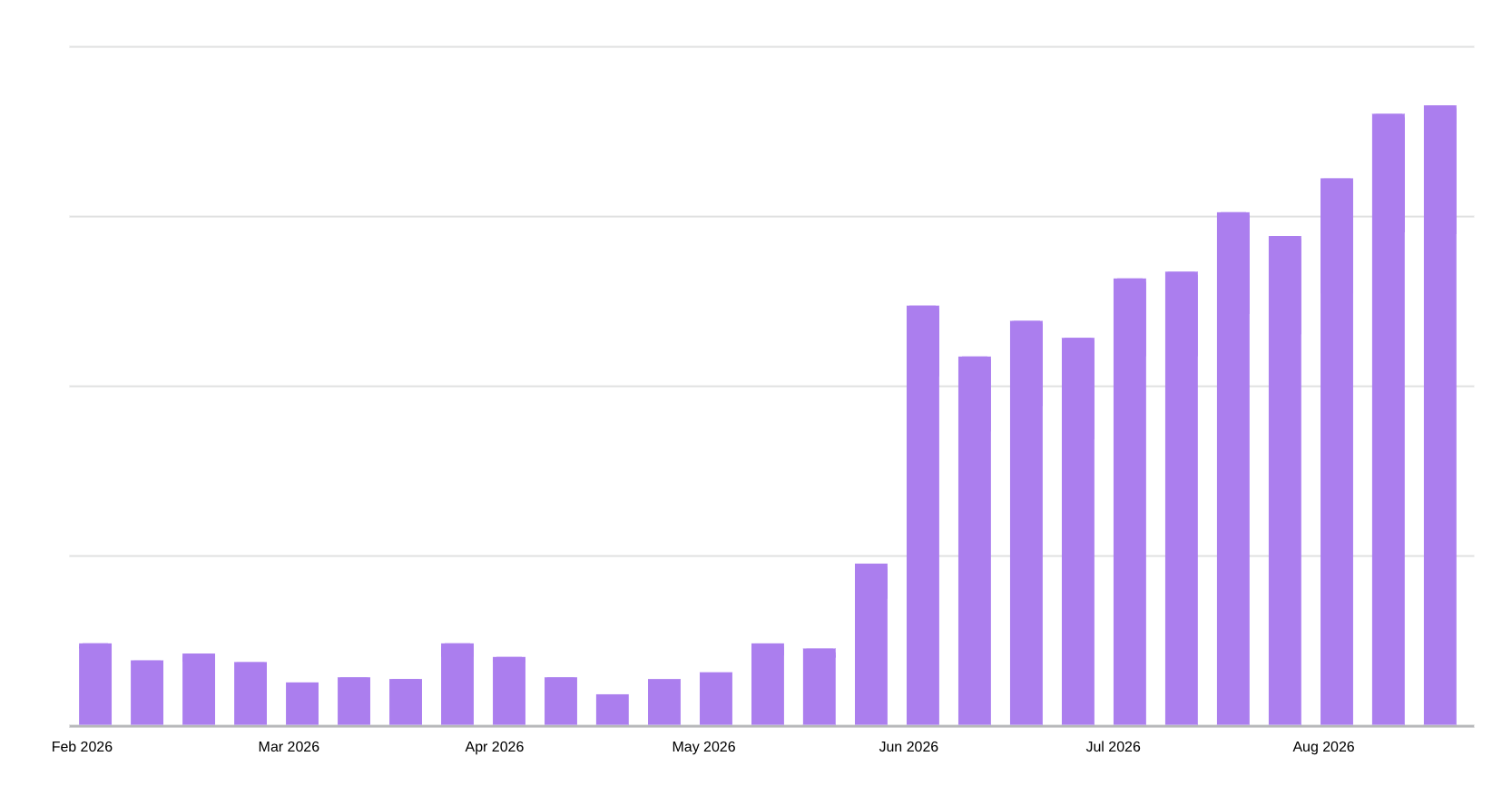
Sessions didn't just grow in total, they also spread more evenly across the day.
Before Smart Pricing, TEAG Mobil's charging was predominantly at 17:00 during the evening commute. Roughly 1 in 6 charging sessions happened in that single hour.
After Smart Pricing, the picture changed substantially.
17:00 remains TEAG Mobil’s busiest hour, but now accounts for roughly 10% of sessions, down from 16%. This is a fundamental change in when TEAG Mobil's network gets used: a charging pattern previously defined by a single spike at 17:00 is now defined by steady demand across almost the whole day.
Why it matters
For any CPO, keeping charging infrastructure in continuous use is essential, as it allows revenue to be generated throughout the day, rather than being concentrated in just a few peak hours. This ultimately means the same hardware is being worked far harder without sacrificing revenue during peak hours.
This matters more as grid capacity tightens. German operators increasingly face demand charges tied to their peak draw from the grid. By shifting charging away from a single evening peak and spreading it across the day, Smart Pricing lowers TEAG Mobil's peak draw without any extra hardware.
Smart Pricing gave TEAG Mobil a lever to improve demand and shape when it happens. The result is a network being used far more evenly throughout the day, not simply a busier one.